
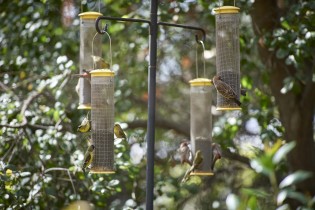
Fly the Bird Migration Super Highway at Bear Divide Banding Station
Discover the spectacle and the science happening at Bear Divide Banding Station

Exhibitions
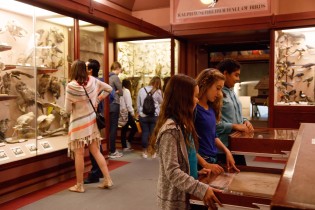
Get up close with hundreds of species of birds in the Ralph W. Schreiber Hall of Birds.

Meet a Live Animal
Get up close and personal with the Museum's resident animals! Hear amazing stories about critters that are often misunderstood or overlooked.
Meet a Live Animal
Get up close and personal with the Museum's resident animals! Hear amazing stories about critters that are often misunderstood or overlooked.
Meet a Live Animal
Get up close and personal with the Museum's resident animals! Hear amazing stories about critters that are often misunderstood or overlooked.
Meet a Live Animal
Get up close and personal with the Museum's resident animals! Hear amazing stories about critters that are often misunderstood or overlooked.
Meet a Live Animal
Get up close and personal with the Museum's resident animals! Hear amazing stories about critters that are often misunderstood or overlooked.
Discover more
Ornithology, the study of birds, is one of the founding disciplines of the Natural History Museum. At the core of the program is a research collection of 121,000 bird specimens, representing over 5,400 species. Our collections are particularly strong for North America, Africa, South America, and the Pacific Ocean.
Unearthed in Ghost Ranch, New Mexico, Labrujasuchus expectatus—the ‘Witch Croc’—highlights the weirdness of life during the dawn of the dinosaurs and the legacy and ongoing discoveries at an iconic site 20 years into excavation
Scientists at the Natural History Museum of Los Angeles County, UCLA, Indiana University, and Cal State University, Dominguez Hills, flock together to measure the reflectance of mid-infrared in bird feathers for the first time.
Vibrant songbirds share a technique with painters: using white and black (feathers) to make their colors pop, NHM scientist finds
The exceptionally rare fossil skull of a new bird species from the Age of Dinosaurs reveals that avian skulls achieved their recognizably modern shape using archaic structures—an unexpected but stunning example of parallel evolution—while also unearthing a missing link in the long evolutionary history of the bird brain.


